Here is the good news up front: cataract surgery has one of the easiest recoveries in all of medicine. The procedure itself takes minutes, most patients notice clearer vision within a day or two, and serious complications are rare. So why does everyone leave the surgery center with a list of rules?
Because for the first few weeks, your eye is doing quiet, important work. The tiny incision is sealing itself, and your new lens is settling into its permanent position. Every restriction on that list exists to protect that process: to keep pressure, water, and bacteria away from a healing eye. None of it means your eye is fragile. It means your eye is busy.
Below is a week-by-week guide to what you can't do after cataract surgery, plus exactly when you can start doing each of those things again.
Your Recovery at a Glance
The First 24 Hours
Rest and protect
Shield on, feet up, drops started. No driving, no rubbing, and no expectations. Blurry is normal today.
Days 2–7
The strictest window
No bending below the waist, no lifting, no eye makeup, and no water in the eye. Most patients feel fine. The rules still apply.
Weeks 2–4
Easing back in
Light exercise, makeup, and normal routines return. Pools, hot tubs, and lakes stay off-limits a little longer.
Weeks 4–6
Fully healed
Your surgeon confirms the eye is stable, restrictions lift, and you're cleared for everything, including swimming.
Day One
You'll go home shortly after surgery with a protective shield over your eye and someone else behind the wheel, because driving yourself home is the first thing you can't do. For the rest of the day, take it easy. Read, listen to music, nap. Your vision will likely be blurry, and the eye may feel scratchy or gritty, like there's an eyelash in it. It may water, and light may seem too bright. All of this is normal and typically fades within a day or two.
The two hard rules today: do not rub or press on your eye, no matter how much it itches, and start your prescribed eye drops exactly on schedule. Those drops prevent infection and control inflammation. They are doing a lot of the healing work for you.
The First Week
Here's the tricky part about the first week: most patients feel great. Vision is already sharper, discomfort is minimal, and it's tempting to jump back into normal life. But this is when the incision is at its most delicate, so the restrictions are at their most strict. Typically, for the first week you should avoid:
A useful way to remember almost every first-week rule: nothing that raises the pressure in your head, and nothing that isn't clean near your eye.
Weeks Two Through Four
This is the rewarding stretch. As the incision strengthens, the rules fall away one by one. Light exercise like brisk walking and gentle stretching typically returns first, around the start of week two. Eye makeup usually gets the green light one to two weeks out. Treat yourself to fresh mascara and liner rather than reaching for pre-surgery products, which can harbor bacteria. Lifting limits gradually relax, and most everyday activities, like cooking, shopping, and light yard work with sunglasses on, are back on the table.
The one holdout is water you don't control. Swimming pools, hot tubs, lakes, and oceans typically stay off-limits for about four weeks. Chlorine doesn't sterilize water, and natural water is even busier with microbes, and an incision that's 95 percent healed is still a door left ajar.
Behind the Wheel
This is the question we hear most, and the answer surprises people: many patients are cleared to drive within a day or two of surgery. It isn't a fixed waiting period. It's a vision standard. At your first follow-up visit, typically the day after surgery, your surgeon checks whether your vision meets Alabama's legal standard for driving. If it does, you're cleared.
Night driving deserves a little more patience. Some patients notice halos or glare around headlights for the first couple of weeks while the eye adjusts to its new lens. If nighttime feels harder than daytime, give it time, and stick to daylight driving until it settles.
The Finish Line
For most patients, the eye is fully healed around four to six weeks after surgery. A final follow-up visit confirms the lens has settled, the incision is sealed, and your vision is stable. If you'll need an updated glasses prescription for reading or fine detail, this is when it's measured. If you're having cataracts removed from both eyes, remember that each eye is done separately, usually a week or two apart, and each one runs on its own recovery clock.
Call Us Right Away If
Some symptoms should never wait for your next appointment
Contact your surgeon immediately if you experience worsening pain, a sudden decrease in vision, increasing redness, new flashes of light or a shower of floaters, a curtain over part of your vision, or discharge from the eye. These are not "wait and see" symptoms. They are "call today" symptoms, and caught early, nearly all of them are treatable.
When in doubt, call. We would always rather check a healthy eye than miss a problem in a healing one.
Quick Answers
One last reminder, because it matters: this guide describes a typical recovery, but your surgeon's instructions are written for your eye. If anything here differs from the post-operative sheet you were given, follow your sheet, and when in doubt, just call our Huntsville office and ask.
Our surgeons will walk you through the procedure, your lens options, and exactly what your recovery will look like before you ever schedule a thing.
Locations
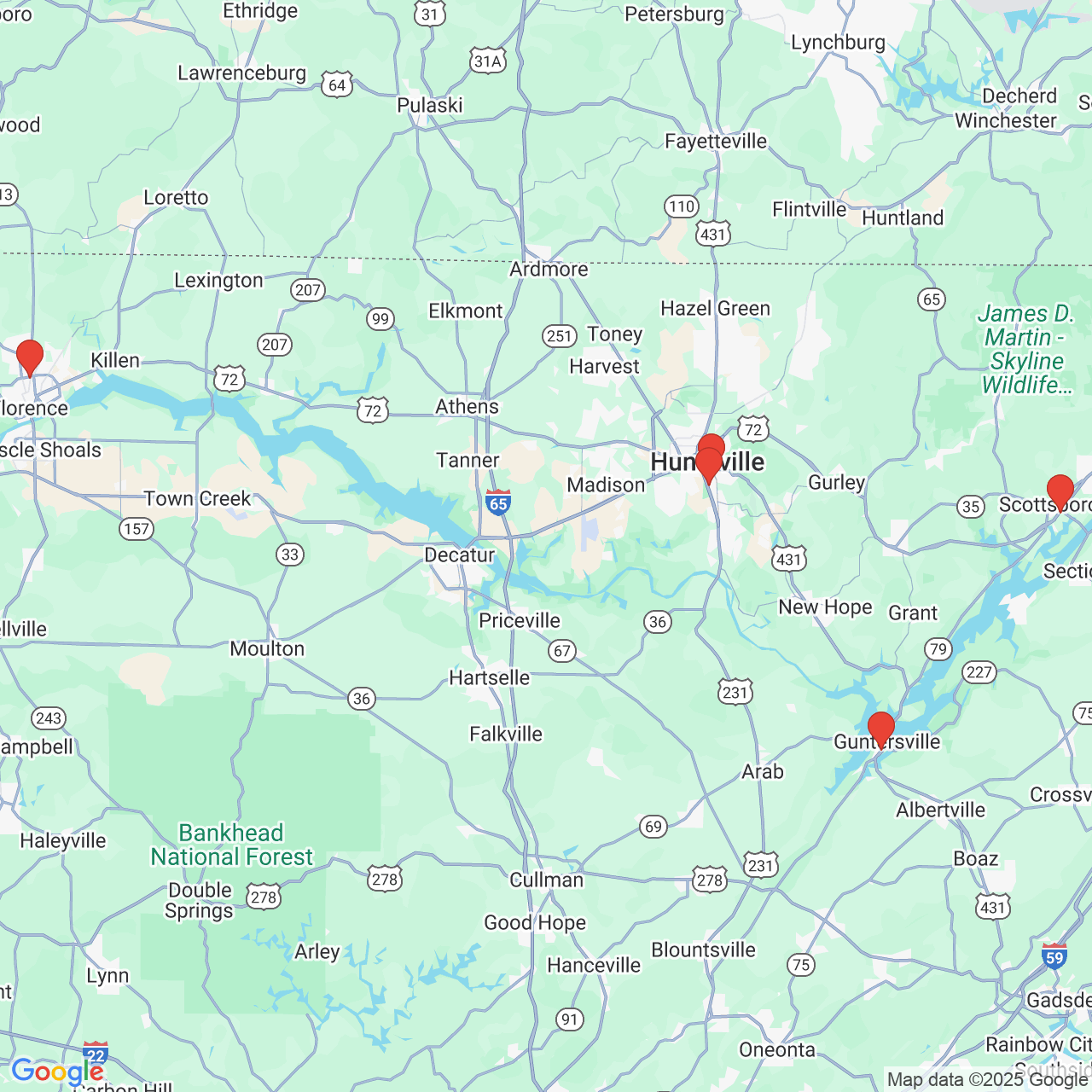
We have 5 locations to visit us at.